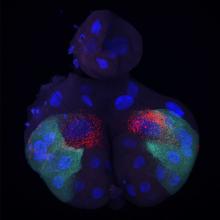
Virus Evolution across scales
A series of Jacques Monod Conferences on the central theme of Virus Evolution started in 2009.
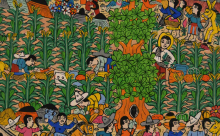
From hunter-gatherers to farmers: The legacy of domestication
The domestication of plants, animals, and micro-organisms represents one of – if not the – major transitions in recent human history. This process profoundly transformed our societies, our ways of life, and our relationship with nature.
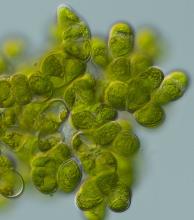
Established and emerging models for eukaryotic development and evolution
For more than a century, biology has been shaped by a handful of powerful model organisms that have transformed our understanding of genetics, development, cell biology, and evolution.
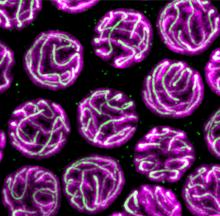
40 years of the cell cycle: from foundational discovery to multiscale biology
40 Years of the Cell Cycle: From Foundational Discovery to Multiscale Biology celebrates forty years since the first Jacques Monod Cell Cycle Conference was held in Roscoff.

Ecology and evolution of host-parasite interactions in a changing world
Global change is in full swing, and increasingly affecting the emergence, spread, and impact of disease.

The mechanistic and evolutionary basis of programmed DNA elimination 🔚 Event concluded
Beyond mutations, the genetic content of an organism is generally constant across cells throughout development.

Insect immunity: the guardian of homeostasis and symbiosis 🔚 Event concluded
The study of insect immune defenses has fascinated scientists since the emergence of germ theory in the 19th century.

Developmental regulation: from molecular to ecological niches 🔚 Event concluded
A series of “Conférences Jacques Monod” has been held since 2012 to address current questions in developmental biology. The program of the conference in 2026 (May 18-22th) will focus on the “niche concept” at diverse scales and its impact on deve

A multidimensional view of speciation: bridging micro and macro-evolution 🔚 Event concluded
Speciation lies at the intersection of microevolution, which focuses on variation within species, and macroevolution, which examines speciation rates and extinction patterns at global scale.

Evolutionary and ecological genomics of polyploidy in plants: temporal dynamics across scales of biological organization from molecules to ecosystems 🔚 Event concluded
One of the most important realizations of the genomics era is that whole genome duplication, resulting from polyploidy, is a central mechanism of biological diversification in plants, leading to adaptation and speciation.